You can't always see it on a scale. Sarcopenic obesity is the co-existence of excess body fat and low muscle mass or strength, and it's increasingly showing up in people decades younger than the older adults it was first described in.
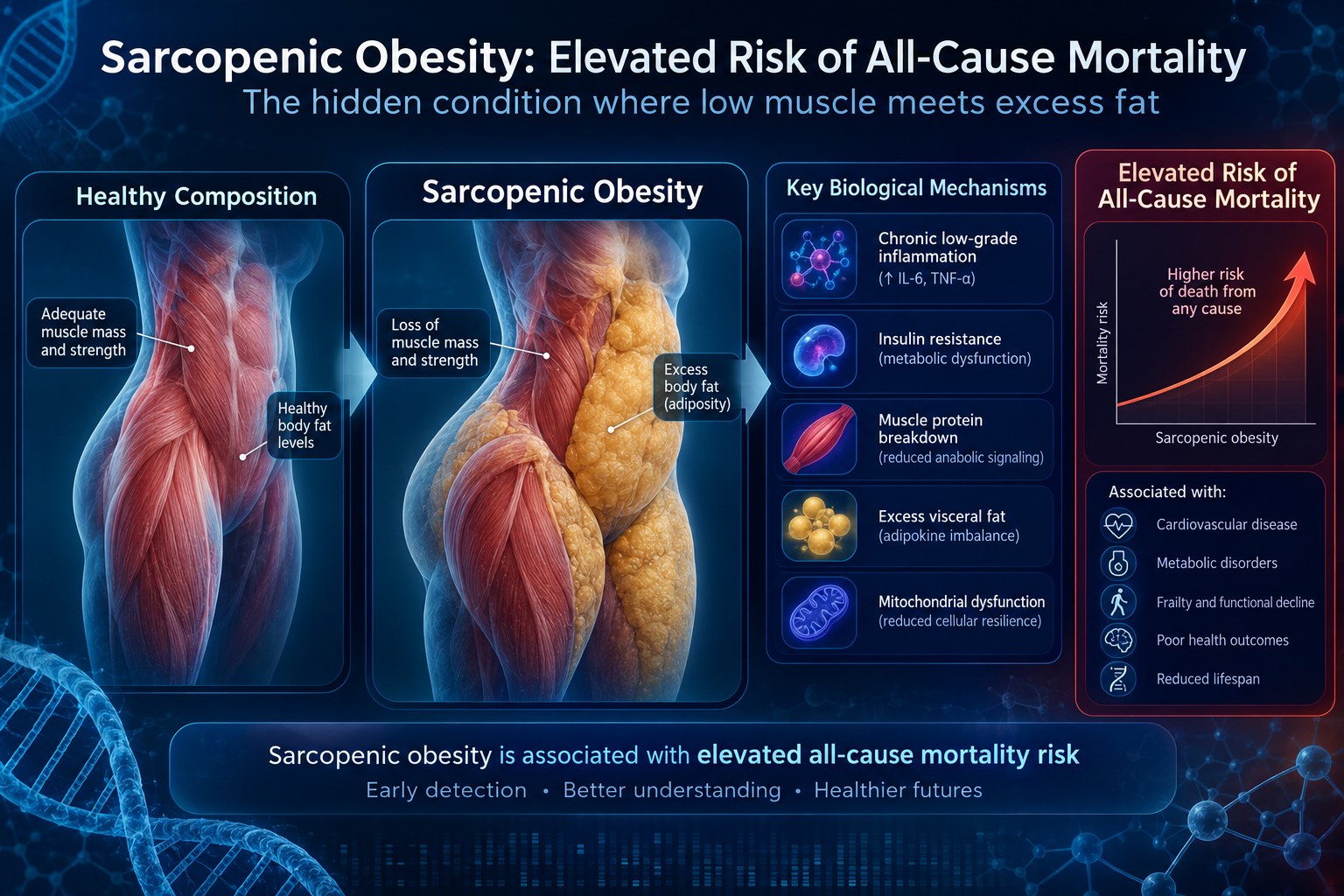
Sarcopenic obesity is a clinical condition defined by an international expert consensus (ESPEN/EASO, 2022) as the co-existence of excess body fat and reduced skeletal muscle mass or muscle function in the same person.
The two problems reinforce each other. Excess fat, especially fat that infiltrates muscle tissue, promotes inflammation and insulin resistance, which accelerates muscle breakdown. Weaker, smaller muscles in turn burn fewer calories and make physical activity harder, which allows fat to accumulate further. This feedback loop is what makes the condition more dangerous than either obesity or muscle loss alone.
Because it's traditionally been studied in older adults, where age-related muscle loss (sarcopenia) meets weight gain, sarcopenic obesity is often thought of as a disease of aging. That assumption is changing fast.
Clinicians typically assess two things: muscle (via handgrip strength, gait speed, or scans like DEXA/bioimpedance) and body fat (via BMI, waist circumference, or fat percentage). A person is classified as having sarcopenic obesity when low muscle mass/function and excess adiposity are both present, regardless of what the bathroom scale says. See the full diagnostic criteria and three-step process for details.
Sarcopenic obesity rarely has one single cause. It develops from an overlapping set of lifestyle, metabolic, and hormonal factors that create a self-reinforcing cycle:
High intake of calorie-dense, low-protein, ultra-processed food promotes fat gain while providing insufficient building blocks for muscle maintenance.
Sedentary behavior (low daily step counts, minimal resistance exercise) is directly associated with the development of sarcopenic obesity.
Insulin resistance, chronic low-grade inflammation, and shifting hormone levels alter how the body partitions energy between fat and muscle.
For a deeper look at the underlying biology, see the full breakdown of causes and pathophysiology.
Because it combines two independently harmful conditions, sarcopenic obesity carries risks greater than the sum of its parts. Research links it to elevated all-cause mortality risk1, alongside cardiometabolic, musculoskeletal, functional, and liver-related harms:
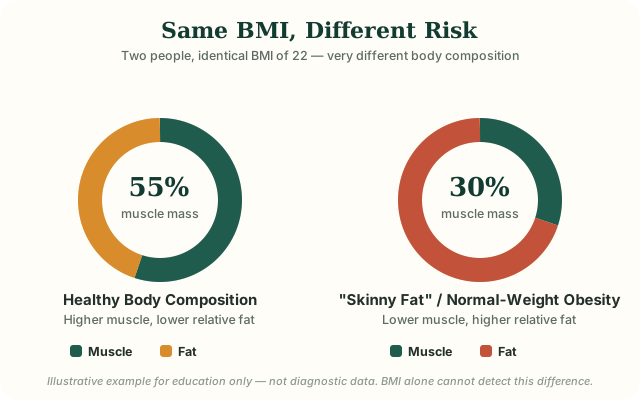
Sarcopenic obesity is usually framed as a condition of older age, but a growing body of research shows the same fat-to-muscle imbalance is showing up in people in their late teens, 20s, and 30s. Because young adults with this profile often have a "normal" body weight or BMI, the condition is easy to miss on a standard health check.
A young adult can have a completely normal BMI (18.5–24.9) while carrying excess body fat (often around the organs). This pattern is defined by body fat percentage alone, not muscle mass, but studies show it carries roughly four times the cardiometabolic disease risk of a healthy body composition and substantially raises the risk of also having low muscle mass, even though the two conditions aren't the same; most people with normal-weight obesity don't meet the full criteria for sarcopenic obesity.
Long hours of sitting (studying, screen time, desk jobs, gaming) combined with low daily step counts has been directly linked to the development of sarcopenic obesity in adults as young as 18. Without regular movement or resistance exercise, muscle simply doesn't get the stimulus it needs to stay strong.
Diets heavy in ultra-processed, high-calorie, low-protein foods, common among students and young professionals, supply excess energy for fat storage while under-supplying the protein needed to build and maintain muscle.
Young adults trying to lose weight quickly through severe calorie restriction or cardio alone (without resistance training) often lose muscle along with fat. The scale drops, but body composition shifts toward more fat and less muscle. That quietly sets up sarcopenic obesity even as weight "improves."
Conditions such as polycystic ovary syndrome (PCOS), insulin resistance, and other endocrine disorders, which frequently emerge in young adulthood, are associated with both fat gain and reduced muscle quality, compounding risk earlier in life.
Because the condition typically isn't screened for in young, seemingly healthy people, cardiometabolic damage, chronic inflammation, and reduced physical resilience can accumulate silently for years before symptoms or diagnoses appear. That raises lifetime risk of diabetes, cardiovascular disease, and early functional decline.
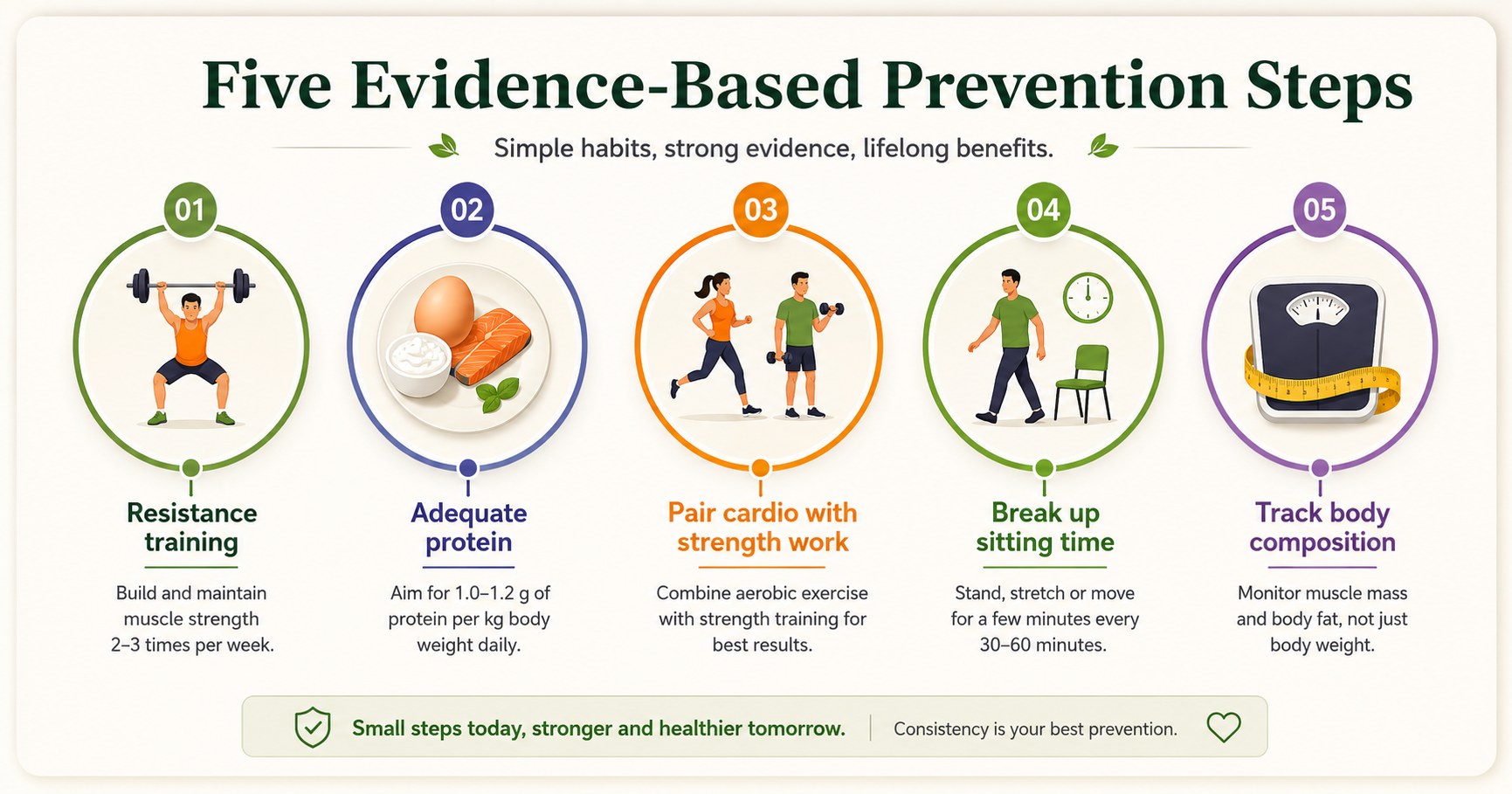
Strength-based exercise 2–3 times per week is consistently shown to reduce body fat while building or preserving muscle mass, strength, and mobility. It's the single most effective intervention studied.
Research supports roughly 1.0–1.8 g of protein per kilogram of body weight per day, especially when combined with exercise, to protect lean muscle during any period of weight loss.
Pair any calorie deficit with resistance training rather than relying solely on cardio or severe restriction, which tends to strip muscle along with fat.
Increasing daily steps and reducing prolonged sitting supports both muscle maintenance and metabolic health, independent of formal workouts.
BMI alone can miss this condition entirely. Body composition measures (waist circumference, grip strength, or a body composition scan) give a far more accurate picture of risk, at any age.
In-depth reads on sarcopenic obesity, muscle health, and risk in young adults, published regularly.
A few short resistance training sessions each week can meaningfully protect muscle in young adults, and starting is simpler than most people think.
Read post → July 30, 2026GLP-1 medications can produce fast, dramatic weight loss, but a meaningful share of that loss can be muscle. Here's what young adults should know.
Read post → July 29, 2026New research complicates the "just eat more protein" advice. Here's what actually protects muscle in young adults.
Read post →